Showing posts with label Kentucky. Show all posts

Tuesday, November 8, 2011

Election Day

The Republican candidate for attorney general lost tonight to Jack Conway; his name was Todd P'Pool. It's a strange name, sure:
To be sure, his name is a bit of a distraction. Turns out he is from an old Kentucky family named Petitpool and the name got hyphenated along the way.
Neat!

Gatewood Galbraith made another great showing for an independent or third-party candidate. Independent candidates are best when running to bring attention to issues, not necessarily to win. It's now a time when half of Americans favor legalizing marijuana. And as the two main candidates are trying to outdo each other on who can be the most meretriciously pro-coal, at least there's one person in the race talking about the external costs of mountaintop removal mining that we all have to deal with.

Monday, May 2, 2011

2010 Kentucky Derby

In 2010, the top three finishers were Super Saver, Ice Box, and Paddy O'Prado.

Tuesday, April 12, 2011

Commemorating the Civil War

There are times, when traveling, that we must fly in to a city, spend a few days there, and depart. But when you see a place in this way, the sense you get of that place is disconnected from the space that it inhabits. You don't get a sense of how far the place is from its neighbors, from its rivals, from its mountains or rivers or coasts. I prefer a mode of travel that is itself a journey: fly into a city if necessary, but travel from there to another place, and depart. To travel overland, be it by train, by car, by ferry, on the surface of the Earth gives you a much deeper appreciation for the context of a place, and how it fits into the space of the world, in relationship to other places.
As with space, so with time. This commemoration of the American Civil War should not be a sudden occasional glimpse of some stuff that happened an arbitrary amount of time ago, but a way to understand the context of the unfolding events of the past, and their relationships to each other, by making an analogy to the timestream that we experience every day. It's low-bandwidth approach to appreciating history: rather than observing deeply for a short period of time, observe shallowly for a long period of time.

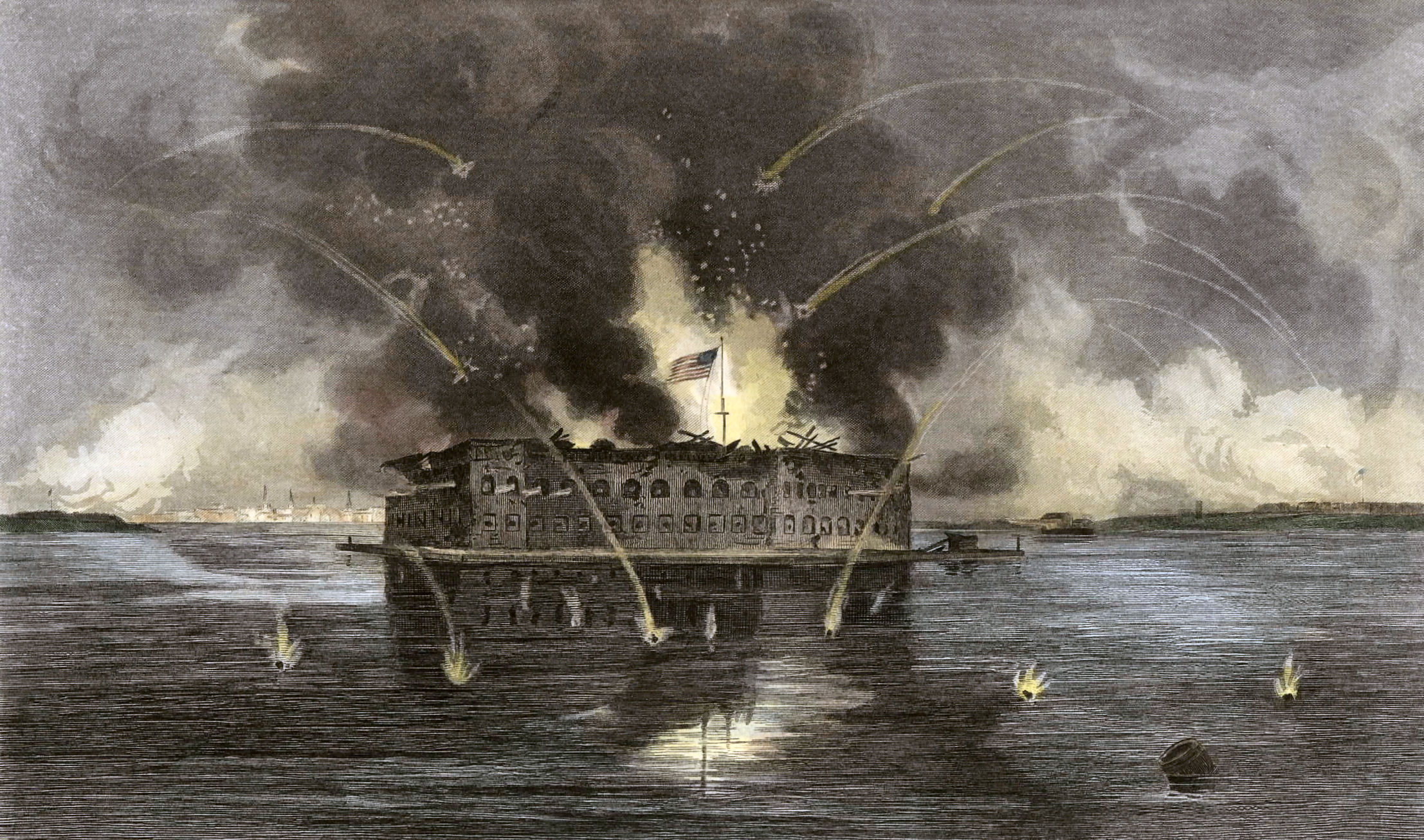
Five months and 150 years ago, in November 1860, Abraham Lincoln was elected president of the United States, and beginning in December, led by South Carolina, the Deep South seceded and seized local federal bases and depots. In the uncertain months of early 1861, South Carolina repeatedly called for the evacuation of Fort Sumter, and the first shots of the war were fired in January to drive off a steamer attempting to resupply the fort. Lincoln took office on March 4, and eventually sent ships to resupply the fort. The morning after the first ships arrived on April 11, Confederate batteries opened fire, and the Civil War began. Virginia seceded on April 17; Robert E. Lee resigned on April 20 to go south; and a week later West Virginia seceded from Virginia. In May, Arkansas and Tennessee seceded, and Kentucky declared neutrality. Not until July was the first major battle of the war fought, at Bull Run, as Washingtonians picnicked.

In the western theater, Kentucky's neutrality would hold until September, when Confederate and Union forces attempted to secure the Ohio River valley at the river's mouth. But the major battles of Kentucky and Tennessee happened in 1862, when the Union captured Fort Donelson on the Cumberland River in February, pushing the front south to the Tennessee River, and the Confederacy was turned back from the Kentucky campaign at the Battle of Perryville in October.

In November 2010, by contrast, the Republicans made significant gains in the House in the midterm elections, and the country's political attention has been focused on conflicts over government spending, federal debt, and military action in the Maghreb. Months will trickle by in the ongoing debates, as the country drifts closer to the 2012 presidential elections, already underway. It's been a similar amount of time from the 2010 elections as from Lincoln's election to Fort Sumter.

So, there are a couple of blogs launched to overview the commemoration of the Civil War as it proceeds: The Long Recall, a period blog of the Civil War, A House Divided at the Washington Post, and Disunion at the New York Times (timeline). A snippet:
Charleston Harbor, S.C., April 9, 1861
After months of anxiety and expectation, there came at last a day of terrible clarity. For months, a single question had preoccupied the men of Fort Sumter’s beleaguered Union garrison, from their commander down to the lowliest private: what would the Lincoln administration do? Would it yield to Southern coercion and evacuate the fort, sending a signal to the world that it was ready to negotiate with the secessionists, and perhaps even let the slave states go in peace? Or would it send reinforcements and supplies to Charleston Harbor — and in so doing, quite possibly touch off civil war?

...the garrison had remained in a bizarre position of both power and powerlessness. One the one hand, as [fort surgeon Samuel Wylie] Crawford realized, they could at will change the course of American history, with a single cannon shot from one. On the other hand, Fort Sumter, which had looked so commanding and impregnable on their first arrival, was beginning to feel less so. On all sides of the harbor, they could see new artillery platforms under construction, cannons being wheeled into place, and in the distance bayonets flashing like a heliographed message, as recruits marched and counter-marched on the beach. Major Robert Anderson, the Union garrison’s commander, expressed it for most in the garrison when he wrote that he felt like “a sheep tied watching the butcher sharpening a knife to cut his throat.”
The Civil War Trust has an animated map of the battle of Fort Sumter, among others. Public, professional, and amateur historians are writing many other blogs (1, 2, 3, 4, 5, 6, 7, 8 ) and lists ( 1, 2, 3, 4, 5, 6, 7 ).
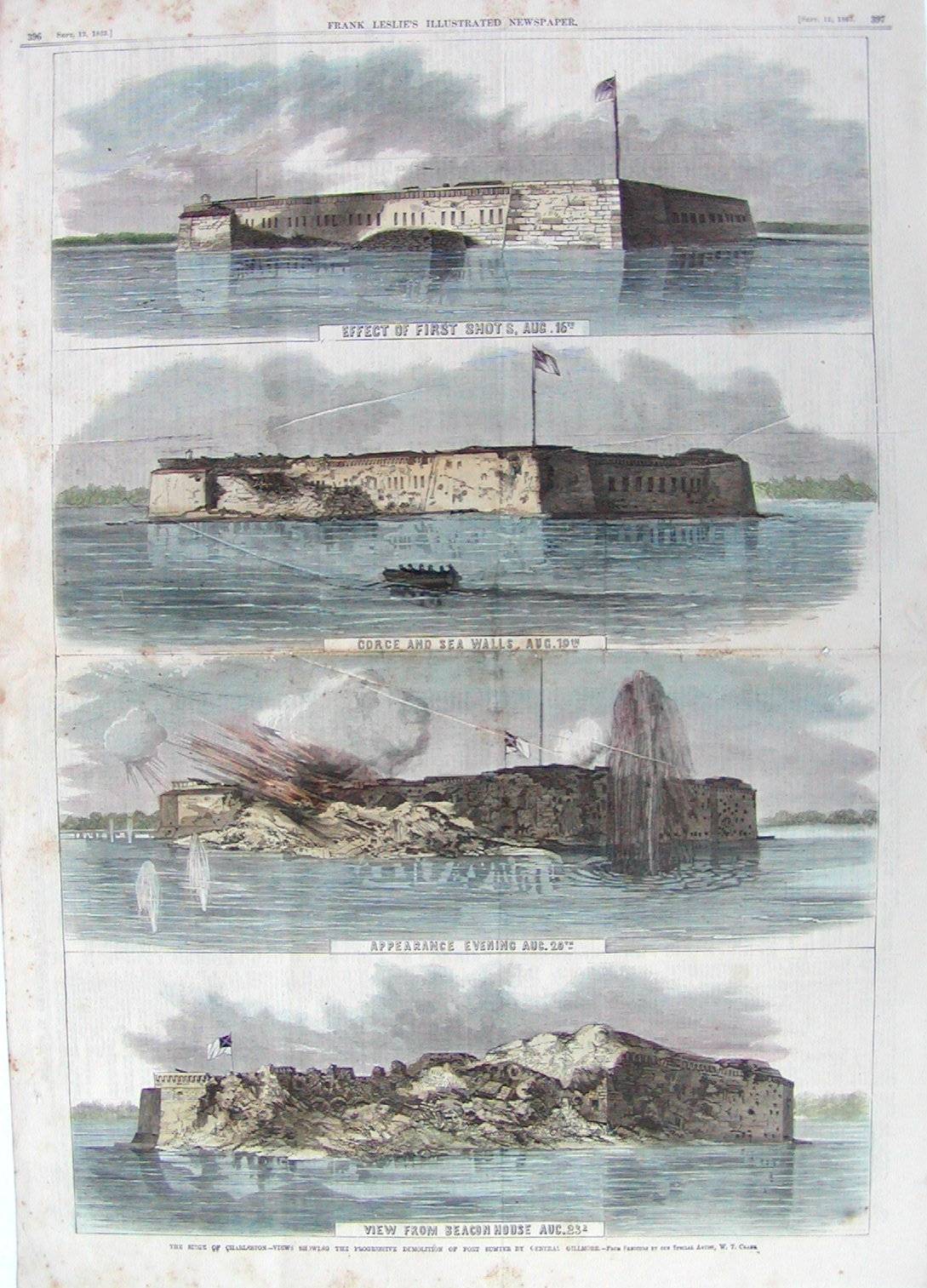
Images: National Park Service Fort Sumter Historic Images

EDIT
In Why They Fight: Civil War Re-enactors and the Battle over Historic Sites (Time), Gregg Segal has a series of photos of Civil War re-enactors in the modern locations of battles.

Baylor University has a digital version of the War of the Rebellion Atlas.

Tuesday, November 2, 2010

Election results 2010

Ken Herndon concedes in the Metro Council race:
With all but two precincts reporting, James had 58 percent of the vote, while Republican Candace Jaworski had 13 percent, and incumbent Independent Deonte Hollowell had just 8 percent; the rest were write-ins.

Democrat Ken Herndon had tried a write-in campaign, but there were far fewer write-in votes cast than James received. County election officials will begin counting write-in votes Monday.

According to the election board, there are 14,013 registered votes in the district, which is centered in Old Louisville.

Herndon said around 8 p.m. Tuesday that he had called James to congratulate him on winning. “There was just too much straight party voting. It was too difficult to overcome,” Herndon said.
Background here and here. Full results later.

Paul beats Conway for the Senate seat, Yarmuth wins re-election, Fischer wins for mayor, and it looks like Ben Chandler won a very narrow re-election in KY-6.

Polls are closing in California, since it's about 10pm now: time to see what happens with Prop. 19.

EDIT (2010-11-11)
Write-in votes for Herndon counted; James win affirmed (C-J):
Democrat Ken Herndon, who ran a write-in campaign after the party’s executive committee selected David James as its candidate for the office, received 900 write-in votes, said Sue Toole, chief operations officer for County Clerk Bobbie Holsclaw.

Based on recorded machine votes, James, a former Louisville police officer and Fraternal Order of Police president, had 3,070 votes, while Republican Candace Jaworski had 657 votes and independent incumbent council member Deonte Hollowell had 398 votes. Herndon had conceded the race to James election night.

Elections 2010

Today is Election Day. I'll be watching the results tonight on the PBS Newshour on KET, as well as WHAS11 and Fox41. The CNN Election Center has good information, and in addition to the Louisville Courier-Journal and the New York Times, there's the usual political blogs. Check out Marc Ambinder's hour-by-hour guide, or try Nate Silver's.

Other useful sites for elections and election watching include:See also various voter guides, including the LEO overview of the Metro Council and mayoral races and the C-J's 2010 Louisville/Kentuckiana Voter Guide.

The most interesting elections this cycle? Prop. 19 in California is the most important vote on cannabis legalization in years, and could have a huge impact on American drug policy. The Louisville mayoral and Metro Council races will be interesting, too, although all the write-in votes will require a hand count.

Friday, April 23, 2010

2010 Kentucky Derby: Linkage

The Kentucky Derby is the first Saturday in May, which this year happens to fall on my birthday. That won't happen again until 2021.

The Louisville Courier-Journal of course has extensive coverage of the Kentucky Derby, including the 2010 Derby Briefing Book and the Horse Racing and local events blogs. The C-J's most-requested Derby recipes was originally published back in 1997: make sure to pick up a gallon of bourbon.

Events follow a schedule, and most everything in April and May are scheduled around Derby and the events scheduled around Derby. Thunder over Louisville, the fireworks and air show, is two weeks before Derby. BBC Brew Day is the week before Derby. The Great Steamboat Race is the Wednesday before Derby; the next day is the parade, and Oaks is on Friday.

Hunter S. Thompson wrote about the 1970 Derby (sort of) in "The Kentucky Derby Is Decadent and Depraved", and William Faulkner wrote on the '55 Derby in "Kentucky. May. Saturday." (h/t JH). Faulkner opens that piece by penning a paean to Kentucky as fine as you'll find. I'm queuing up the 1969 film of Faulkner's last book.

Anyhow, this post was intended to be about coverage of the race itself. The official sites are Oaks, Kentucky Derby, and Churchill Downs. Churchill owns TwinSpires.com for online wagering.

The New York Times' The Rail blog covers the Triple Crown. The 2009 edition was begun on April 20, and featured a blackberry-bourbon mint julep recipe. Steven D. Levitt often reveals his Derby picks at the Freakonomics blog (he was pretty hilariously wrong in 2009). The Baltimore Sun's horse coverage is more geared towards the Preakness. But it makes me think about how fantastic "The Wire" was.

Blood Horse has coverage of Triple Crown Mania, and CBS Sports and ESPN have horse racing feeds. Many horse racing sites like the Daily Racing Form are oriented towards subscribers, although there are some blogs ( 1 2 3 4 5 6 ). Wikipedia has a list of the winners back to Aristides.

The Kentucky Derby YouTube channel has including replay back to 2002. Here's the 2009 Derby, 2008 Derby and Oaks, 2007 Derby, 2006 Derby, and 2005 Derby, as well as things like Welcome to Louisville and Making your Mint Julep. I moved to Louisville in 2004, right after Smarty Jones won; so the first Derby I really paid attention to was won by Giacomo.

Wednesday, April 14, 2010

Louisville Cycling Blogs

A while ago, I tried to compile a list of notable or regular Louisville-specific bike blogs. It's a few months old, but still pretty reasonable. Post more, guys!

No such list would be complete without Broken Sidewalk, of course.

EDIT
Check out the blog for new local business Vic's Classic Bikes. Here's one for you, Hal Heiner.

Wednesday, January 13, 2010

Louisville's 1890s-1900s political machine

I've been digging around for some information on the end of electoral fusion in the Ohio River Valley and Kentucky, and there's a fascinating account of the machine politics of Louisville in the 1890s and 1900s in UK historian Tracy Campbell's book "Deliver the Vote" (also here). Campbell does a great job of making it a fantastic—and appalling—story. The juiciest passages are about Louisville boss John Henry Whallen, but Campbell has a great section earlier on the assassination of Kentucky governor William Goebel and the Goebel Election Law.

The Australian ballot is the secret ballot, and it seems Louisville was the first city in the U.S. to use it. Some of the stuff described here is really amazing. I'll quote liberally, but the best stuff is in the book:
Louisville is not a location that one normally thinks of as a cesspool of corruption. Quite the contrary, as the city that pioneered the Australian ballot, it is usually seen as progressive and mostly immune from the problems that plagued so many other areas.

...After Reconstruction, Louisville was Kentucky's largest city and the eighteenth largest in the nation. ...The city relied heavily on Ohio River commerce for its economic base and had a cosmopolitan mixture that included Democratic Irish Catholics and Republican African-Americans. Politically, the Democratic party effectively controlled the city as the memories of the Civil War persisted, and the winner of the city's Democratic primaries was effectively the winner of the general election in November.

Throughout the 1880s, Louisville had experienced a series of fraudulent elections. To correct the problem of repeaters, a Louisville representative, Albert Stoll, introduced a bill in the Kentucky legislature calling for mandatory registration in Louisville. ...His bill became law in 1884, but it had no effect on reforming the process.

...One of the members of the 1887 committee was Arthur Wallace, a Louisville state representative. After reading an article on the new secret ballot system used in Australia, Wallace approached some area judges to see whether a law mandating such a system could pass constitutional muster in Kentucky. Wallace's bill could not be applied to the entire state without amending the state constitution, so it affected Louisville's municipal contests only. When the "Wallace Election Bill" quietly became law in February 1888, Louisville became the first municipality in the nation to adopt the new voting method.

...By the 1890s, John Whallen, a young burlesque theater owner, became the acknowledged king of Louisville's Democratic party. ...Whallen once boasted that his burlesque theater was the real center of the city's political apparatus, a place he once described candidly as "the political sewer through which the political filth of Louisville runs."

...After temporarily losing control of city government in the mid 1890s, Whallen reappeared, helping his hand-picked candidate win the mayor's race, due in large part to a new method employed by followers of Whallen: police intimidation of African-American voters. When a prominent African-American attorney attempted to vote, he was confronted by a police officer who told him, "I have worn out four billies and I will wear this one out on you." Less violent means, such as clerks slowly checking registration lists, meant those wishing to vote in the heavily African-American Ninth and Tenth wards often waited hours to cast a ballot. Of course, many found that before they had reached the front of the line, the polls had closed. ...Without the strong arm of the police, Whallen's machine could not have controlled Louisville's elections.

Whallen's cronies used other methods to fight the Republican turnout among African-Americans. By 1900, the 28,651 African-Americans living in Louisville comprised nearly fourteen percent of the city's population. Although Democrats had not legally disenfranchised African-Americans in Kentucky as they had throughout the Deep South, electoral intimidation and fraud remained potent tools in the hands of people such as Whallen. The historian George C. Wright wrote that Whallen hired black "shadies to form Negro Democratic Clubs, which were little more than instruments of organized intimidation of African-American voters, and concluded that "Negro thugs, as much as anything else, kept blacks from viewing the Democrats as a respectable party." When that tactic failed, Whallen resorted to the well-tested strategy of appealing to white supremacy and the fears of what Republican victories might bring to Louisville's racial climate.

By the early 1900s, then, John Whallen directed the Democratic machine in Louisville. But he was not without his opponents among the city's Republican stalwarts, as well as a number of Democrats who resented Whallen using the city's political apparatus to increase his personal wealth and power. ...With the 1903 election fresh in their minds, disenchanted Democrats joined with angry Republicans to form a fusionist party which, with its combined strength, hoped to defeat the Democratic mayoral candidate, Paul Barth, in the upcoming 1905 election.

...The Whallen machine employed area criminals to intimidate African-Americans from registering, and understood that the illegal registration of "repeaters" had a dual effect: It could potentially crowd off from the rolls many legal voters, thus making the job of controlling the election that much easier. ...When challenges were made by Fusionists to some questionable Democratic attempts to register, a Louisville police officer named Roman Leachman threatened the challengers on several occasions. Leachman shouted that if an official "refuses to register another man, I will smash him in the head and kill him and I will come and throw his carcass into the street; he doesn't amount to anything." One official meekly inquired if Leachman was overstepping his bounds, and in revealing language Leachman underscored the reason for the police presence at the registration booths: "To hell with you. This means nothing to your crowd, and means four years for me, and of course I am going to look out for my own interests." The next day, Fusion workers were simply thrown out of their polling places and Democratic officials seized registration books and completed them in private.

...In order for all of the corrupt figures in the Louisville election to do their jobs properly, money was a necessity. ...Fred R. Bishop, treasurer of the Democratic campaign fund, later described how he went about raising these funds. Candidates for various city offices were to contribute ten percent of their current city salary, while police officers contributed according to their rank... After acquiring the money from Bishop, the ward captains knew what to do with it. They spent part of their money paying city police officers and firefighters to take the day off to perform various chores in helping Democrats. More than twenty percent of the city's firefighters claimed they were sick on Election Day and were put to use on behalf of the Democratic campaign.

...In the 38th Precinct of the Third Ward, three armed men simply took the ballot box at gunpoint, loaded it on a wagon and carried it away. ...In the Twelth Ward, a former member of the fire department and devout Whallenite, John Barry, pulled a pistol on an election worker and demanded the ballot books. With the help of three policemen, Barry took the books to another location, swore in his own election workers, and proceeded to stuff ballot boxes with hundreds of his own votes.

Some of the abuses Campbell describes are just amazing by modern standards. At one point during registration, a worker accepted a glass of lemonade from a saloon owner and passed out; he realized he'd been drugged when his registration books turned up with a large number of forged names in them. Barth won the election, but in May 1907, the election results were overturned in court, and the governor named an interim mayor and municipal officials. But Whallen's candidate won for mayor in 1909 with a viciously racist campaign.

Monday, December 14, 2009

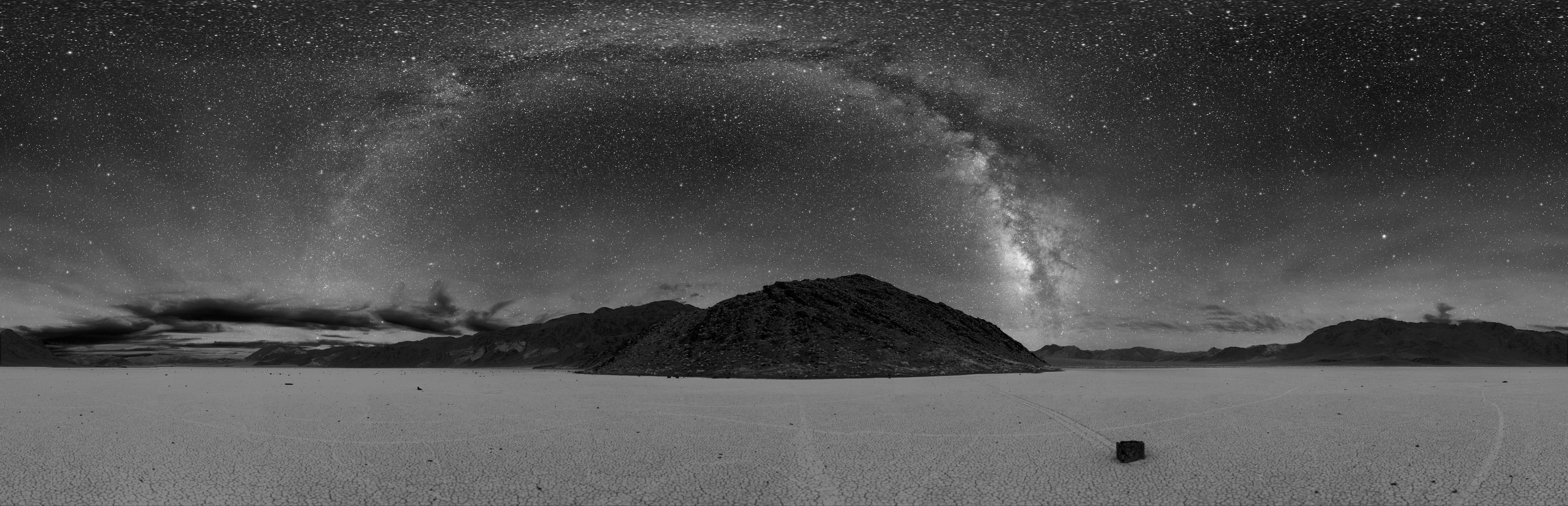
A River of Stars in a Dark Sky

In Japanese, the Milky Way is known as "天の川 (あまのがわ)", the River of Heaven, because it appears as a mighty river of stars flowing through the night sky. Every summer, people celebrate "Tanabata", a festival that recognizes this phenomena.

Long ago, there was a princess named Vega, who was the daughter of the king of heaven. Every day, she went to the banks of the Milky Way River to weave clothes for her father. But since she worked so hard, she was very lonely. One day, she met a cowboy tending his herd on the other side of the river. His name was Altair, and they fell in love and soon got married. But after they were married, the princess didn't weave clothes for her father, and the cowboy let his animals wander all over the sky. This made Vega's father angry, so he banished Altair to the other side of the river to separate the couple. Each of the pair could only sit on opposite sides of the river and look wistfully at each other. But on one night every year, on the seventh night of the seventh month, the pair of stars are allowed to meet one another, since a flock of magpies agreed to form a bridge over the river with their wings.

This phenomena is hard to see, because of pervasive light pollution in the developed world, the extent of which is apparent in maps of Earth's city lights. In most cities, light pollution is so severe that only the very brightest starts are faintly visible, while in truly dark areas, the light of the Milky Way can cast a visible shadow.

The International Dark Sky Association advocates against light pollution. There are a few locations in the eastern US designated as a dark sky preserve, including Cherry Springs State Park in northern Pennsylvania. The park has annual star parties that attract hundreds of astronomers, which began in the late 1990s when individual hobbyists noticed an isolated black patch on nighttime satellite photos.

Similar maps can be seen at the World Atlas of Artificial Night Sky Brightness. One of the largest patches of dark skies in the eastern US appears to be in eastern West Virginia in the Monongahela National Forest. This area is the heart of the National Radio Astronomy Observatory, which has the world's largest fully steerable radio telescope in a radio quiet zone at Green Bank, WV.

For nearer places, the DarkSky Finder is a Java application that works in Firefox. Near Louisville, the darkest sites are southwest of Leavenworth, IN, in the southeastern portion of the Hoosier National Forest and across the river in the corresponding section of Kentucky. There is a slightly darker area immediately west of Hazard, KY, around Buckhorn Lake (an area with a high incidence of communities with interesting names). There are some maps and brochures of the Daniel Boone National Forest for this area; the Redbird Crest Trail, especially the eastern side, is in the middle of this dark spot. The topo maps could useful as well; 17 is Buckhorn Lake; 44 shows the area around Thousandsticks west of Hyden; and the Redbird Crest Trail is on 11 and 28, centered on Creekville.

Wednesday, December 2, 2009

Electoral fusion in Kentucky law

I looked up some time ago where the Kentucky electoral law bans electoral fusion in this state, and then misplaced the link. It's KRS 118.405: No candidate's name shall appear on any voting machine or absentee ballot more than once, except that a candidate's name may appear twice if he is a candidate for a primary or a regular election and also a candidate to fill a vacancy in the same office required to be filled at a special election, when the special election to fill a vacancy is scheduled for the regular election day.

KRS 118.015 provides some definitions: A "political party" is an affiliation or organization of electors representing a political policy and having a constituted authority for its government and regulation, and whose candidate received at least twenty percent (20%) of the total vote cast at the last preceding election at which presidential electors were voted for; "Political organization" means a political group not constituting a political party...but whose candidate received two percent (2%) or more of the vote of the state at the last preceding election for presidential electors; and..."Political group" means a political group not constituting a political party or a political organization... KRS 118.105 informs us that any political organization not constituting a political party as defined in KRS 118.015 may make its nominations as provided in KRS 118.325. And it appears that KRS 118.345, preventing defeated primary candidates from having their name on a regular election ballot, would prevent something like what Connecticut Senator Joe Lieberman did in 2008.

According to the 2008 Kentucky election results, Independent Ralph Nader received 0.8% of the vote, Libertarian Party nominee Bob Barr received 0.3% of the vote, and Constitution Party nominee Chuck Baldwin received 0.3% of the vote.